
Holistic Tools for Pregnancy Comfort in 2026
· Terri Speid

Last Updated: November 10, 2026
Quick Summary
Pregnancy comfort means easing everyday physical and emotional strain with gentle, low-risk tools and routines instead of reaching for medication first. In 2026, holistic tools for pregnancy comfort lean practical: sleep support, gentle movement, relaxation rituals, and everyday comfort for a changing body. Buy for a symptom when it appears rather than stocking up in the first trimester.
- First-time moms need four buckets: sleep support, gentle movement, relaxation, and everyday comfort.
- A full-body pillow supports hips, back, and knees, and velvet covers hold warmth if you sleep hot.
- Try a movement routine three or four times a week and adapt it by trimester.
- Dilute, ventilate, and ask your care provider before using any new essential oil.
- Patch test every new oil on your inner arm and wait 24 hours before wider use.
Table of Contents
- Why Holistic Pregnancy Comfort Matters in 2026
- Pregnancy Must-Haves for First-Time Moms
- Sleep Support and Pregnancy Pillows for Restful Nights
- Easing Back, Hip, and Pelvic Discomfort with Movement Tools
- Aromatherapy for Anxiety During Pregnancy
- Essential Oil Safety During Pregnancy
- Your Pregnancy Shopping List by Month
- Building Your Comfort Kit with Grace & Cadence
- Frequently Asked Questions
Why Holistic Pregnancy Comfort Matters in 2026
Pregnancy comfort is the practice of reducing everyday physical and emotional strain through gentle, low-risk tools and routines rather than reaching for medication first. At Grace & Cadence, we see expectant mothers asking better questions than ever: not just "what works," but "what is safe, what is worth buying, and what can I do at home for free." That shift is why holistic tools for pregnancy comfort in 2026 lean practical rather than trendy.
The core idea is simple. Your body is changing week by week, and comfort tools should change with it. A pillow that helps at month four may feel wrong by month eight. An oil that soothes you in the second trimester may need a second look before you use it again. The NHS guidance on common pregnancy symptoms is a sensible starting point for understanding what is normal and when to call your midwife.
Below, we cover the tools we recommend most often, how to use each one safely, and a month-by-month shopping list so you buy only what you need, when you need it.
Pregnancy Must-Haves for First-Time Moms
First-time moms need fewer products than the internet suggests. The essentials fall into four buckets: sleep support, gentle movement, relaxation, and everyday comfort for a changing body.
Start with what you already own. A firm cushion between your knees, a warm bath, and a short daily walk cover a surprising amount of ground. Then add tools as specific needs appear.
- Sleep support: a body pillow or knee cushion
- Movement: a mat for prenatal yoga and stretching
- Relaxation: a journal, calming tea, or breathing practice
- Everyday comfort: loose layers and a waistband extender for later months
A common mistake is buying everything in the first trimester. Wait until a symptom shows up, then buy for that symptom. Your needs will be clearer, and your budget will thank you.
Sleep Support and Pregnancy Pillows for Restful Nights
The best pregnancy pillow is the one that supports your hips, back, and knees at the same time without overheating you. Side sleeping becomes harder as your belly grows, and a full-body pillow takes pressure off the lower back and hips through the night.
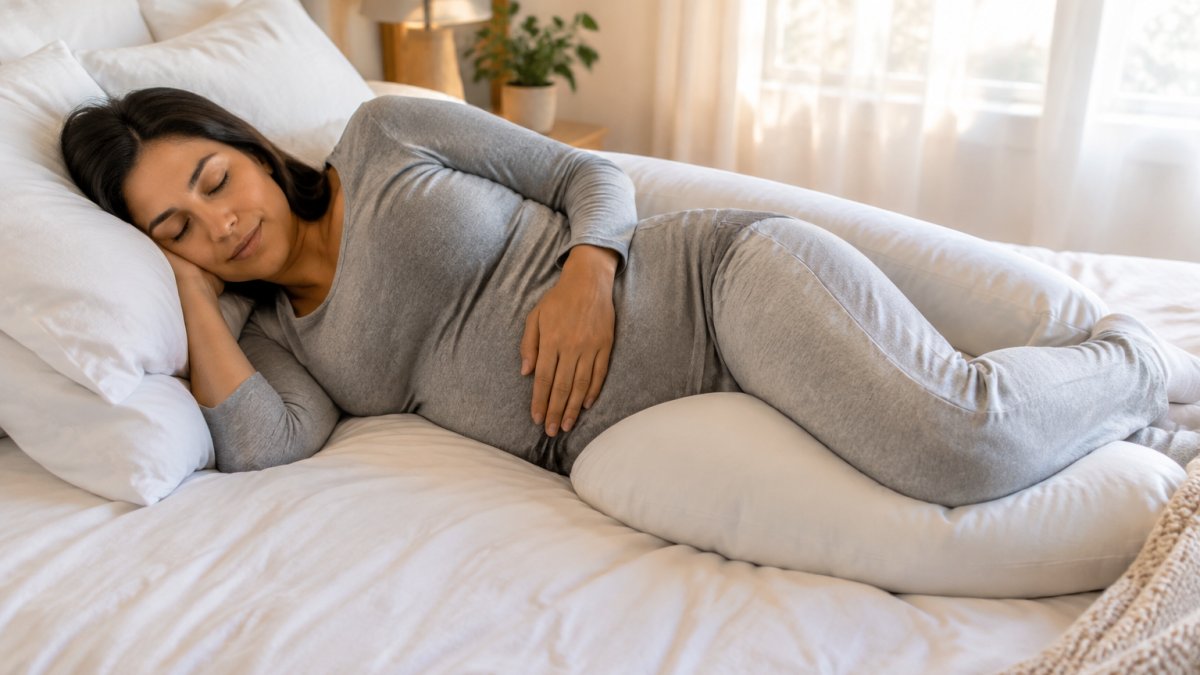
Our HerPillow Ultimate 5-in-1 Premium Full-Body Pillow is designed for full-body support. It measures 55 by 31 inches, uses 6 lb of premium polyester fill, and comes with a removable, machine-washable velvet cover. The oversized shape is made to support the back, hips, knees, neck, and shoulders in one piece.

One honest note: velvet holds warmth. If you sleep hot, layer a cotton pillowcase over the cover or cool the room, and swap to a lighter cover in summer. Allow 24 to 72 hours after opening for the pillow to reach full fluff.
For neck support, the Shoulder Zoned Dough Cooling Gel Pillow uses a soft center and firmer edges to keep your head and neck aligned.
Easing Back, Hip, and Pelvic Discomfort with Movement Tools
Movement is the most underrated comfort tool in pregnancy. A mat, a ball, and ten minutes a day can make a real difference. Movement tools work best when they are used safely and adapted to your body and stage.
Try this simple routine three or four times a week:
- Sit on a balance ball and circle your hips slowly for two minutes
- Move into cat-cow stretches on hands and knees for five slow rounds
- Do ten supported pelvic tilts, breathing out as you tilt
- Finish with a side-lying stretch for thirty seconds per side
Adapt by trimester. In the first trimester, you can usually keep your existing routine with minor tweaks. In the second trimester, avoid long periods lying flat on your back and keep the ball work upright and supported.
Adapt for accessibility and different bodies. If getting down to the floor is difficult, do cat-cow with your hands on a sturdy chair or counter. If balance is a concern, keep the ball against a wall or use a chair instead.
When to stop and call your care provider. Stop and check in if you feel sharp pain, pubic or pelvic pressure, contractions, dizziness, bleeding, or fluid leaking. Discontinue any movement that causes pain rather than a gentle stretch.
Our Natural Rubber & PU Yoga Mat is 5 mm thick and measures approximately 185 by 68 cm. Let it air out after unpacking if it has a new-product smell.
For tension between sessions, the Acupressure Mat and Pillow Set offers a quiet way to lie still and relax. It is a relaxation accessory, not a treatment, and it is not suitable for children age 5 and under.
Aromatherapy for Anxiety During Pregnancy
Aromatherapy for anxiety during pregnancy works best as a calming ritual, not a cure. The ritual matters as much as the scent: a few slow breaths, a familiar aroma, and a pause in your day.
The American College of Obstetricians and Gynecologists on anxiety in pregnancy notes that emotional wellbeing is a core part of prenatal care, and that support should be discussed openly with your care team. Scent can be one small, pleasant part of that support.
If you want to understand what aromatherapy can and cannot do for anxious feelings, our guide to the real benefits of aromatherapy for anxiety walks through it in plain language.
Keep sessions short and gentle. If a scent makes you feel lightheaded or queasy, stop and open a window. Your sense of smell is heightened now, and yesterday's favorite can become today's nausea trigger.
Essential Oil Safety During Pregnancy
Essential oil safety during pregnancy comes down to three rules: dilute, ventilate, and ask before you use anything new. Never apply undiluted oil to skin, never swallow essential oils, and always check with your midwife or doctor if you are unsure. That said, vague advice is not very useful when you are standing in a shop or scrolling a product page. Here is the practical detail we share with readers.
Check dilution first. If you are using a pre-made roller or diffuser blend, check the label for dilution rather than assuming it is ready to use neat, and ask your care provider what is appropriate for you.
Patch test every new oil. Apply a small amount of the diluted blend to your inner arm, cover it, and wait 24 hours. If you see redness, itching, or swelling, stop. Your skin becomes more sensitive in pregnancy, and an oil you tolerated before may now irritate you.
Ventilate and keep sessions short. A diffuser run for 10 to 15 minutes in a well-ventilated room is plenty. Do not run a diffuser in a closed, small room for hours, and keep it away from infants and pets.
Ask before you use a new oil. Guidance varies by source and trimester, so treat any new oil as something to clear with your care provider first.
Warning signs to stop immediately. Discontinue use and contact your care provider if you experience skin irritation or any unusual symptoms after using an oil. Scent can be a lovely part of your comfort routine, but it should never feel like something you push through.
For a deeper walkthrough of choosing products, read our guide on how to choose safe aromatherapy products for pregnant women.
Your Pregnancy Shopping List by Month
Buying by trimester keeps your comfort kit relevant and your spending sensible. Here is the list we would build, month by month.
| Stage | What to Add | Why It Helps |
|---|---|---|
| Months 1-3 | Journal, calming tea, ginger snacks | Supports rest and nausea relief |
| Months 3-5 | Body pillow, yoga mat | Sleep support as side sleeping begins |
| Months 5-7 | Waistband extender, belly band | Everyday comfort for a growing bump |
| Months 7-9 | Massage mat, acupressure set | Eases back, hip, and pelvic tension |
| Postpartum | Roller, tea set, journal | Gentle self-care in recovery |
Building Your Comfort Kit with Grace & Cadence
A comfort kit should be small, personal, and used often. Ours centers on four things: something to sleep with, something to move on, something to smell, and something to write in.
The Be Present 100 Guided Prompt Journal gives you a quiet place to reflect and write at your own pace. If you are building a full kit, browse our Mindfulness & Self-Care collection and our Sleep & Relaxation collection.

Watch out: don't buy a full collection before you know what your body needs. Start with one or two items, live with them for a few weeks, and add only what earns its place.
Pregnancy comfort is not about buying more. It is about choosing a few tools that meet the needs you actually have, this month, and using them gently and consistently. At Grace & Cadence, we curate every item with that intention in mind, from full-body pillows to soothing aromatherapy and reflective journals, so you can build a kit that supports rest, relief, and peace of mind. Get started with Grace & Cadence and create a comfort kit that grows with you.
Frequently Asked Questions
What are some holistic ways to feel more comfortable during pregnancy?
Holistic pregnancy comfort starts with small, consistent practices: supportive sleep tools like a full-body pillow, gentle movement such as prenatal yoga, aromatherapy for relaxation, and stress management through breathing exercises. The goal is to support your body and mind without relying solely on medication, always checking with your healthcare provider before trying new tools.
Are aromatherapy products safe to use during pregnancy?
Not all essential oils are considered safe during pregnancy. Safety varies from oil to oil, so ask your healthcare provider before using any of them. Always consult your healthcare provider before using any essential oil, especially in the first trimester. Patch test diluted oils on a small area of skin and discontinue if irritation occurs.
Which pregnancy comfort tools are useful for first-time moms?
Many first-time moms find it helpful to start with a few versatile items, such as a supportive pillow, a yoga mat, or a journal. Start with a few versatile items and add as your body changes. A pregnancy shopping list by month can help you plan purchases without overspending.
What should I ask my healthcare provider before using essential oils while pregnant?
Ask which oils are safe for your specific stage of pregnancy, how to dilute them properly, and whether any could interact with medications or conditions. Mention any history of allergies, asthma, or high blood pressure. Also ask about safe methods of use (diffusion vs. topical) and signs of adverse reactions. Keep the conversation open and follow their guidance over general advice.
How can I build a pregnancy shopping list by month?
Start with first-trimester essentials like a journal and gentle skincare. In the second trimester, add a pregnancy pillow and yoga mat as sleep and movement needs increase. By the third trimester, consider items that support relaxation and comfort, and check with your care provider about any aromatherapy you plan to use. Adjust based on your symptoms and comfort, and always prioritize safety-checked items.
