
The Real Benefits of Aromatherapy for Anxiety
· Editorial Team

Last Updated: October 28, 2026
Quick Summary
Aromatherapy for anxiety uses pleasant, familiar scents to ease subjective tension and support a sense of calm, though research is promising but uneven and no specific outcome can be promised. Treat scent as one supportive ritual among several rather than a cure.
- Lavender, chamomile, bergamot, geranium, cedarwood, and vetiver each bring a distinct character to relaxation blends.
- Inhalation delivers scent to the olfactory system within seconds, making it useful for a quick reset.
- Run a diffuser in short windows of 20 to 60 minutes and ventilate the room afterward.
- Always patch test a new oil on your inner arm and wait 24 hours before wider use.
- If anxiety disrupts sleep, appetite, work, or relationships, talk to a doctor or licensed mental health professional.
Table of Contents
- How Aromatherapy Soothes Anxiety and Stress
- The Best Essential Oils for Anxiety and Relaxation
- How to Use Essential Oils for Stress Relief Each Day
- Aromatherapy Safety During Pregnancy and Beyond
- Aromatherapy and Sleep: Building a Calmer Evening
- Creating a Personalized Oil Blend for Your Mood
- When Anxiety Needs More Than a Calming Scent
- Finding Your Calm with Grace & Cadence
- Frequently Asked Questions
How Aromatherapy Soothes Anxiety and Stress
At Grace & Cadence, we treat scent as a gentle companion to self-care, not a cure.
What the Research Can and Cannot Tell Us
Here is the honest version most guides skip. Aromatherapy research is promising but uneven. Many studies are small, short, and hard to compare, so no one can promise a specific outcome for you. What the evidence does suggest is a general pattern: pleasant, familiar scents can ease subjective tension and support a sense of calm. The National Center for Complementary and Integrative Health overview of aromatherapy is a fair starting point for understanding those limits. Treat scent as one supportive ritual among several, and you will approach it with the right expectations.
The Best Essential Oils for Anxiety and Relaxation
A handful of essential oils appear in relaxation blends. Lavender, chamomile, bergamot, geranium, cedarwood, and vetiver each have a distinct character.
Lavender, Chamomile, and Other Calming Favorites
Chamomile brings a soft, apple-like warmth. Bergamot has a bright citrus edge. Geranium is floral, cedarwood is dry, and vetiver is deep and earthy. If you would rather not blend your own, our Anxiety Relief Essential Oil Roller combines lavender, bergamot, frankincense, patchouli, and cedarwood in a pre-diluted roller.

How to Use Essential Oils for Stress Relief Each Day
Learning how to use essential oils for stress relief comes down to small, repeatable moments rather than one big gesture. The method matters less than the consistency, but the method you choose does shape how strong the scent is, how long it lasts, and what safety precautions you need. Pick two or three touchpoints in your day and let scent become part of the rhythm.
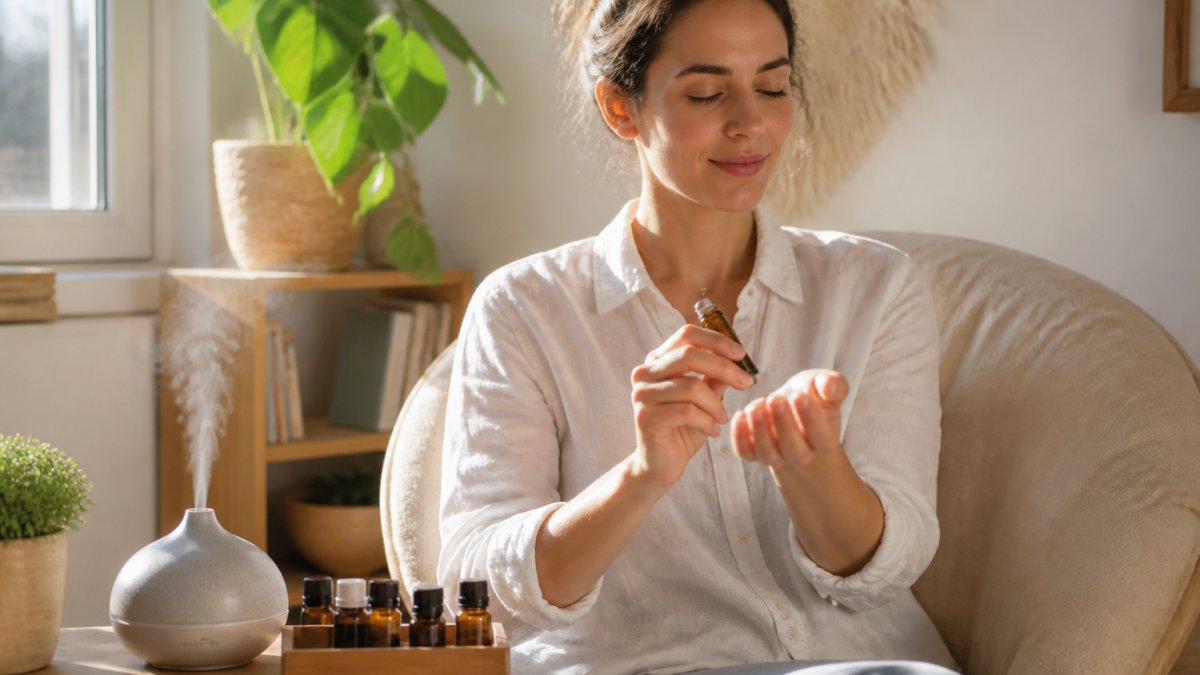
Aromatherapy Methods Compared
Most guides list oils but skip the practical differences between delivery methods. Here is how the four most common approaches compare.
| Method | How it works | Best for | Watch-outs |
|---|---|---|---|
| Inhalation (direct sniff from bottle or a drop on a tissue) | Scent reaches the olfactory system within seconds | Quick reset before a meeting, on the commute, mid-afternoon | Keep the bottle away from eyes; avoid over-sniffing, which can dull the response |
| Diffuser (ultrasonic or reed) | Scent fills a room for 20-60 minutes | Evening wind-down, reading, stretching, creating a calming environment | Ventilate the room; run in short windows rather than all day; keep away from pets and small children |
| Topical (pre-diluted roller or carrier-oil blend on wrists, temples, chest) | Scent releases slowly from skin while the oil is absorbed | On-the-go calm, bedtime ritual, pairing scent with touch | Always dilute; patch test first; avoid broken skin and the face |
| Bath or shower (a few drops in a carrier oil or bath salt, never straight into water) | Warmth plus scent creates a full-sensory pause | End-of-day decompression, sore-muscle evenings | Oils don't mix with water, use a carrier; clean the tub after to prevent slips |
A simple daily framework using these methods:
- Morning: one slow inhale from the bottle before you start your day.
- Midday: a drop on a tissue near your desk, or a short diffuser session.
- Evening: a roller on the wrists or a pillow spray as you settle.
Our Essential Oil Diffuser Blends offer twelve signature scents.

Aromatherapy Safety During Pregnancy and Beyond
Aromatherapy safety during pregnancy deserves more care than most articles give it, and the same care applies well beyond pregnancy. Scent can be a lovely comfort, but your body is more sensitive during pregnancy, and reactions vary from person to person. A few practical guardrails keep the ritual gentle.
Dilution and Skin Reactions
Always patch test a new oil or blend on your inner arm and wait 24 hours before using it more widely. Stop using any product that causes itching, burning, or a rash.
Anxiety Relief Essential Oil Roller →
Ingestion, Ventilation, and the Room
Essential oils are concentrated and are not meant to be swallowed unless a qualified practitioner directs it, ingestion carries real risk of poisoning and should be avoided at home. When diffusing, run the diffuser in short windows (20-60 minutes) and ventilate the room afterward. Strong, continuous diffusion can overwhelm a small space and irritate eyes or airways.
Pregnancy, Nursing, and Health Conditions
If you are pregnant, nursing, or managing a health condition such as asthma or a seizure disorder, ask your midwife, doctor, or a qualified aromatherapist before using a new oil. Some oils are traditionally avoided during pregnancy, and a clinician who knows your history is the right person to advise. Keep sessions short, ventilate the room, and start with the mildest option you can find.
Children and Pets
Keep essential oils out of reach of children, and do not apply them to a child's skin without professional guidance, children's skin is thinner and more reactive. Many common oils, including some citrus and tea tree varieties, are considered risky around cats, dogs, and birds; diffuse only in rooms pets can leave, and never apply oils to a pet's fur or bedding.
Aromatherapy and Sleep: Building a Calmer Evening
A calming evening routine is where scent earns its keep. The goal is repetition: the same aroma, at the same time, every night, until your body reads it as a signal to slow down. Lavender is the classic choice here. Diffuse for a short window while you read or stretch, then let the room settle. A pillow spray or a drop on a tissue near the bed keeps the association close without overwhelming the space. For a gentle anchor, our lavender aromatherapy candle can set the mood as the light fades.
Creating a Personalized Oil Blend for Your Mood
A personalized blend starts with a simple question: what do you want to feel? Match the scent family to the mood, then test it in small doses before committing.
| If you want to feel | Try | How to use it |
|---|---|---|
| Grounded and steady | Cedarwood, vetiver, patchouli | One drop on a tissue, inhale slowly |
| Lifted and lighter | Bergamot, grapefruit, lemon | Short diffuser session in the morning |
| Soft and soothed | Lavender, chamomile, geranium | Roller on the wrists before bed |
| Clear and refreshed | Eucalyptus, peppermint, pine | Diffuse for a short window mid-day |
When Anxiety Needs More Than a Calming Scent
Scent is a comfort, not a clinician. If anxiety is disrupting your sleep, your appetite, your work, or your relationships, that is a signal to bring in more support. Talk to a doctor or a licensed mental health professional. Aromatherapy can sit alongside that care as a daily ritual, but it should never delay it. For the moments between sessions, a reflective tool can help you name what you are feeling; our guided journal for anxious thoughts offers gentle prompts for exactly that.
Finding Your Calm with Grace & Cadence
We curate aromatherapy and self-care pieces with that in mind: thoughtful, gentle, and made to fit real life. Explore our sleep and relaxation collection to find what suits you.
Frequently Asked Questions
How does aromatherapy help with anxiety?
Aromatherapy uses the scent of essential oils. It is not a replacement for professional care.
Which essential oils are best for reducing anxiety?
The Anxiety Relief Essential Oil Roller includes lavender, bergamot, frankincense, patchouli, and cedarwood.
Is aromatherapy safe to use during pregnancy for anxiety?
Aromatherapy safety during pregnancy deserves care. The Anxiety Relief Essential Oil Roller is listed as pregnancy safe.
How long does it take for aromatherapy to help with stress?
The catalog describes the Essential Oil Diffuser Blends for aromatic use and lists a recommended diffusion duration of one hour, up to three times daily.
Anxiety rarely resolves in a single quiet evening, but a steady ritual can make hard days softer. Grace & Cadence offers pre-diluted rollers, signature diffuser blends, and a handcrafted ceramic diffuser with quiet mist settings and a soft timer, all designed to fit into the routines you already keep. Get started with Grace & Cadence and build a calmer daily rhythm, one gentle breath at a time.
