
How to Choose Herbal Teas for a Peaceful Prayer Routine
· Editorial Team

Last Updated: November 1, 2026
Quick Summary
The best herbal teas for a peaceful prayer routine are caffeine-free blends with a gentle, floral or fruity character. Choose chamomile and lemon balm for quiet morning reflection, lavender and passionflower for evening wind-down, and rooibos or honeybush for all-day comfort.
- Start with caffeine-free blends, since a stimulant works against the stillness you are trying to build.
- Brew one teaspoon per cup, taste, and adjust rather than making a very concentrated brew.
- Set your cup and tea out the night before so the first decision of the day is already made.
- Keep morning prayer to three to five minutes with a warm cup to build a repeatable routine.
- Brew a calming cup about 30 minutes before bedtime and keep the portion modest.
Table of Contents
- Why Herbal Tea Belongs in a Prayer Routine
- Herbal Tea for Relaxation: What to Look For
- Best Herbal Teas for a Peaceful Prayer Routine
- Creating a Peaceful Morning Prayer Routine with Tea
- Calming Teas for Evening Routines and Bedtime Prayer
- Herbal Tea Ritual Ideas for Mindfulness and Reflection
- Safety, Interactions, and Who Should Use Caution
- Building Your Tea and Prayer Practice with Grace & Cadence
- Frequently Asked Questions
Why Herbal Tea Belongs in a Prayer Routine
A cup of herbal tea is more than a warm drink; it is a gentle signal to your body that quiet is coming. The best herbal teas for a peaceful prayer routine can help you slow the breath before you settle into reflection. The ritual of boiling water, choosing a blend, and waiting for the steep gives your mind a moment to arrive. Many people find that a soothing cup helps them transition from the noise of the day into a calmer, more attentive frame of mind.
Herbal Tea for Relaxation: What to Look For
Start with caffeine-free blends, because a stimulant works against the stillness you are trying to build.
Consider how you will brew it: loose leaves in an infusion bag or a simple basket both work well, and hot water just off the boil protects delicate herbs.
Choose a blend that matches the mood you want. Floral herbs lean toward quiet reflection, while minty or citrus notes can feel more uplifting. There is no single right answer, only the cup that helps you exhale.
Match the Blend to Your Prayer Setting
A useful way to choose is to think about when and how you pray, not just which flavor you like. The table below compares common prayer settings with the herbal character that tends to suit them. This is a practical guide, not a rule; personal preference always comes first.
| Prayer setting | What you may want | Herbal character to look for | Example herbs |
|---|---|---|---|
| Early morning, before the day starts | Gentle alertness without jitters | Light, floral, softly uplifting | Chamomile, lemon balm, lemon verbena |
| Midday pause or short reflection | A clean, refreshing reset | Minty or citrus, not heavy | Peppermint, spearmint, lemongrass |
| Evening prayer or winding down | Deep calm and release | Floral, softly sedating | Lavender, passionflower, chamomile |
| Bedtime prayer | Quiet transition to rest | Calming, low aroma intensity | Passionflower, holy basil, lavender |
| All-day comfort or sipping slowly | Warm, rounded, food-friendly | Malty, naturally sweet | Rooibos, honeybush |
If you prefer floral cups, lean toward chamomile and lavender; if you prefer minty or citrus, start with lemon balm or peppermint. The goal is a cup you will actually look forward to, because a routine you enjoy is a routine you will keep.
A Note on Strength and Steeping
Stronger is not always better for a prayer routine. A very concentrated brew of a sedating herb can leave you foggy, especially in the morning, while a weak cup may feel like nothing at all. Start with the standard one-teaspoon-per-cup ratio, taste, and adjust. If you are new to a particular herb, try it on a day when you do not need to be sharp, so you know how your body responds before you build it into a daily practice.
Best Herbal Teas for a Peaceful Prayer Routine
The best herbal teas for a peaceful prayer routine are caffeine-free blends with a gentle, floral or fruity character. The right pick depends on whether you pray in the morning, at midday, or late at night.
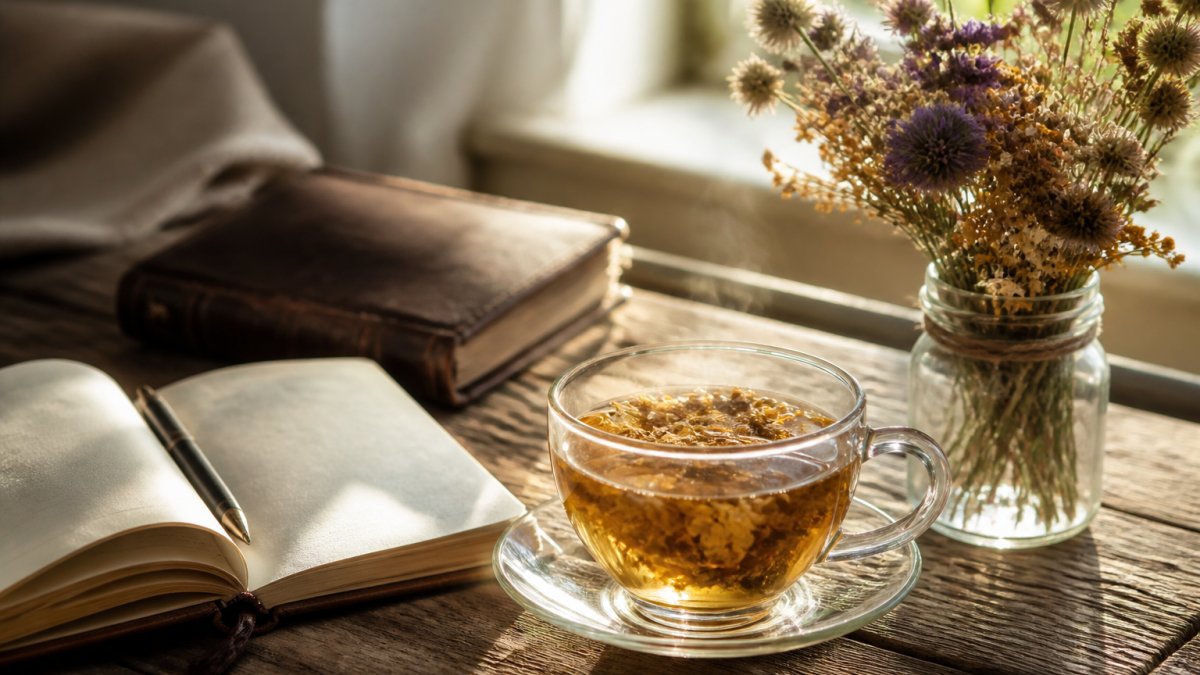
Here is a simple comparison to help you choose:
| Blend | Main Herbs | Best For | Caffeine |
|---|---|---|---|
| Nightfall Rest and Digest | Chamomile, lemon balm, lemon verbena | Evening reflection | None |
| Restful Sleep Sleepytime | Passionflower, lavender, holy basil | Bedtime prayer | None |
| Rooibos and honeybush blends | Rooibos, honeybush | All-day comfort | None |
| Sampler set | Ten assorted blends | Exploring flavors | None |
If you are unsure where to begin, the Top 10 Caffeine Free Teas Sampler lets you try a range of flavors before settling on a favorite.

Chamomile and Lemon Balm Blends for Quiet Reflection
Chamomile and lemon balm are the gentle workhorses of calming tea. Chamomile brings a soft apple-like sweetness, and lemon balm adds a bright, lemony lift. Our Nightfall Rest and Digest Herbal Tea pairs these two with lemon verbena, fennel, and a touch of ginger. The strawberry and vanilla notes soften the floral edge, making it easy to sip slowly during a quiet morning prayer.

Best for: anyone who wants a gentle, fruity cup for reflective prayer. Skip if: you prefer a stronger, more bitter herbal taste.
Lavender and Passionflower for Winding Down
Lavender and passionflower lean toward the evening. Lavender carries a familiar floral aroma, while passionflower is a common ingredient in evening blends. Our Restful Sleep Sleepytime Tea brings these together with wild lettuce, holy basil, and hawthorn berries. It is recommended to brew one cup around 30 minutes before bedtime.

Best for: bedtime prayer and releasing an overactive mind. Skip if: you need to stay alert, since it is not recommended before driving.
Rooibos and Honeybush for Caffeine-Free Comfort
Rooibos and honeybush offer a naturally sweet, malty base that feels comforting without any caffeine. They suit any hour of the day and take milk well if you like a creamier cup. Blends built on these herbs, like our chocolate mint and pumpkin caramel options, can make a prayer pause feel a little indulgent. For a simple, unflavored choice, an earthy cup like our Organic Moringa Tea is one option when you want something clean.
Nightfall - Rest and Digest Herbal Tea (Caffeine Free) →
Creating a Peaceful Morning Prayer Routine with Tea
A peaceful morning prayer routine starts before the kettle boils. Set your cup and tea out the night before so the first decision of the day is already made. When you wake, heat the water, steep your blend, and let the steam rise while you settle into your seat.
A simple sequence many people find helpful looks like this:
- Prepare the night before. Set out your cup, your tea, and anything you like to read or journal with. Remove one small decision from the morning.
- Heat the water and steep. Choose a gentle morning blend such as chamomile, lemon balm, or a light rooibos. Let the steep be a pause, not a task.
- Settle in the same spot. Sit where you plan to pray. Let the warmth of the cup anchor your hands and your attention.
- Breathe before you speak. Take three slow breaths, in through the nose and out through the mouth, before you begin your prayer or reflection.
- Pray or reflect for a short, set time. Three to five minutes is enough to begin. A timer can help you keep the practice bounded and repeatable.
- Close with one sentence. End with a single line of gratitude or intention, then sip the last of the tea.
Keep the routine short and repeatable. Three to five minutes of stillness with a warm cup is enough to shift the tone of a morning. The same spot, the same cup, and the same blend become a cue your mind learns to recognize.
Adapting the Routine to Different Mornings
Some mornings call for a softer approach. If you wake anxious, choose a blend with lemon balm or chamomile and spend the first minute simply holding the warm cup. If you wake groggy, a minty or citrus blend can feel more refreshing than a heavy floral one. The routine stays the same; only the blend changes. This is why a sampler set can be useful early on, since it lets you learn which morning cup suits you best without committing to a large tin of something you may not love.
Calming Teas for Evening Routines and Bedtime Prayer
Evening calls for a softer approach. Choose a blend with lavender, passionflower, or chamomile and brew it a little before you plan to rest. Dim the lights, put your phone away, and let the cup cool to a comfortable warmth. Sipping slowly gives your nervous system time to settle.
A calming cup before bedtime prayer can become the bridge between a busy day and a quiet night. Keep the portion modest so you are not woken later, and let the ritual itself, not the volume, do the work.
Herbal Tea Ritual Ideas for Mindfulness and Reflection
Turning tea into a ritual takes only a little attention. Try one of these ideas to deepen your reflection:
- Steep with intention. Name one thing you are grateful for as the leaves steep.
- Hold the warmth. Let the cup warm your hands and take three slow breaths before the first sip.
- Read a short passage. Pair your tea with a page of scripture or a journal prompt.
- Pair with scent. A drop of calming aromatherapy nearby can deepen the atmosphere; our article on the real benefits of aromatherapy for anxiety explains how to use it gently.
- Sip in silence. Finish the cup without screens or conversation.
These small practices turn an ordinary drink into a quiet anchor for the day.
Safety, Interactions, and Who Should Use Caution
Herbal teas are not risk-free for everyone. If you are pregnant, nursing, managing a health condition, or taking medication, talk with your doctor before adding a new herb to your routine. Some herbs can interact with prescriptions or affect how the body processes other substances. The MedlinePlus guide to herbal medicine offers plain-language safety information worth reading first.
Use tea as a comfort and a ritual, and consult a professional when something feels wrong.
Building Your Tea and Prayer Practice with Grace & Cadence
A practice grows best when it is simple and kind to yourself. Start with one cup and one quiet moment, then let it expand naturally. If you want to build a wider practice beyond tea, our guide to spiritual growth tools for women offers gentle next steps for reflection and faith.
At Grace & Cadence, we curate wellness and faith-minded products for reflection and personal growth. Our collection includes caffeine-free herbal teas, aromatherapy, and literature.
Frequently Asked Questions
What herbal tea is best for relaxation?
Chamomile, lavender, and lemon balm are among the most widely used herbs for relaxation. Chamomile has a gentle floral flavor. Lavender offers a familiar floral aroma. Lemon balm has a bright lemon scent. Many people enjoy a warm cup of any of these herbal teas, sipped slowly, as part of a quiet routine.
Which herbal teas are caffeine-free?
True herbal teas, also called herbal infusions or tisanes, are naturally caffeine-free because they do not contain leaves from the Camellia sinensis plant. Chamomile, lavender, lemon balm, peppermint, rooibos, honeybush, and passionflower are all caffeine-free options. Blends like Nightfall and Restful Sleep are caffeine-free. Always check the label to confirm, especially with flavored blends.
Can drinking tea help create a calming prayer routine?
Yes, the ritual of preparing and sipping tea can serve as a gentle anchor for prayer. The warmth of the cup, the floral aroma, and the quiet moments of steeping create natural pauses that invite reflection. Pairing a caffeine-free herbal tea with your prayer time can help you slow down and focus. Many people find that holding a warm mug becomes a physical cue that signals the start of a peaceful, contemplative practice.
How do you make tea part of a daily spiritual practice?
Start by choosing a caffeine-free herbal tea that you enjoy, such as a chamomile blend or a rooibos option. Set aside a consistent time, whether morning or evening, and prepare the tea slowly, noticing the aroma and the warmth. Use the steeping time as a moment of quiet reflection or a short prayer. As you sip, let the routine draw your attention inward. Over time, the practice can become a comforting ritual.
Building a peaceful prayer routine is easier when the tools are already at hand. Grace & Cadence offers caffeine-free herbal teas, calming aromatherapy, and faith-based literature, all chosen to support rest and reflection. Explore our herbal tea collection and let a warm cup become the start of your quietest moments. Get started with Grace & Cadence and make space for peace in your day.
