
Can Natural Pain Relief Help Cancer Survivors?
· Editorial Team

Last Updated: October 26, 2026
Quick Summary
Natural pain relief for cancer survivors works best as supportive care alongside your oncology team, not as a replacement for medical treatment. Gentle options like massage, acupuncture, mind-body breathing, and adapted movement can ease tension, stiffness, and nerve discomfort. Always screen for safety first, start gently, and tell your care team what you try.
- Pain after cancer comes from the disease itself or from surgery, radiation, chemotherapy, and hormone therapy.
- Tell your oncology team about any therapy before starting, especially with bone, nerve, or lymphedema concerns.
- Start massage with a 20- to 30-minute session at light to moderate pressure.
- Try slow breathing in for four counts and out for six, five minutes twice a day.
- Call your doctor promptly if pain is new, suddenly worse, or comes with fever, swelling, numbness, or weakness.
Table of Contents
- Understanding Pain After Cancer Treatment
- Complementary Therapies for Cancer Pain: What Works and What's Safe
- Mind-Body Techniques for Pain: Calming the Nervous System
- Gentle Exercise for Cancer Survivors: Movement as Medicine
- Natural Pain Relief Products for Home Use
- When to Call a Doctor About Cancer Pain
- Building Your Personal Pain Relief Plan
- Choosing Comfort Tools for Your Recovery
- Frequently Asked Questions
Understanding Pain After Cancer Treatment
Natural pain relief for cancer survivors starts with understanding what you are actually feeling. Pain after cancer is not one thing.
At Grace & Cadence, we hear from survivors who describe aching joints, tingling hands, stiff shoulders, and deep fatigue that comes with discomfort.
Cancer-related pain is discomfort caused by the disease itself or by the treatments used to fight it. It can be short-lived or linger for months after treatment ends.
Pain From Cancer vs. Pain From Treatment
These two are not the same, and they rarely feel the same.
Pain from the cancer itself often comes from a tumor pressing on bone, nerve, or tissue.
Pain from treatment is different. Surgery can leave scar tissue and stiffness. Radiation can cause skin tenderness and tight muscles.
Knowing which type you are dealing with helps you choose the right comfort tool.
Why Survivorship Pain Deserves Attention
Survivorship pain is real, and it is common. Many survivors assume that once treatment ends, discomfort should end too. When it doesn't, they quietly accept it.
That silence costs quality of life. Persistent pain affects sleep, mood, movement, and the simple joy of daily routines. Gentle, consistent attention to it, rather than resignation, is what changes the experience.
Complementary Therapies for Cancer Pain: What Works and What's Safe
Complementary therapies for cancer pain are supportive approaches used alongside medical care, not in place of it. They can ease tension, improve sleep, and help you feel more in control.
Safety comes first, and safety after cancer treatment is personal. A therapy that suits one survivor may be unwise for another depending on treatment history, nerve changes, bone health, skin condition, and medications.
Safety Screening: Questions to Ask Before You Begin
Most practitioners who work with cancer survivors use a short screening conversation before the first session. A common pattern is to review:
- Treatment history, surgery, radiation, chemotherapy, hormone therapy, and when each ended
- Nerve changes, numbness, tingling, or burning in hands and feet (peripheral neuropathy)
- Bone health, whether you have osteoporosis, bone metastases, or a history of fractures
Massage and Gentle Touch
Massage and gentle touch can relax tight muscles and calm the nervous system. Light pressure is usually the right choice; deep tissue work can be too much for tender areas, healing tissue, or limbs at risk of lymphedema.
A practical rule many survivors find helpful: start with a 20- to 30-minute session, keep pressure light to moderate, and tell the practitioner immediately if anything feels sharp, numb, or worse afterward.
Acupuncture and Other Complementary Therapies
Acupuncture is used by many survivors for nausea and pain, and licensed practitioners adjust for low platelet counts and sensitive skin. Ask your care team for a referral to someone experienced with cancer patients, and confirm the practitioner uses single-use needles.
Other approaches survivors often explore include:
- Acupressure, gentle pressure on specific points, often taught for nausea and relaxation
- Reflexology, light pressure on feet and hands; check first if you have neuropathy or foot wounds
- Gentle yoga or tai chi, slow movement and balance work, adapted for fatigue and joint stiffness
Evidence Quality and Realistic Expectations
It helps to know what the research can and cannot tell you.
A realistic expectation sounds like this: "This may take the edge off and help me rest, and I will tell my care team whether it helps." That framing keeps you open to comfort without overpromising.
For home comfort between sessions, a red light therapy band designed for pain relief and recovery offers a gentle, drug-free option many survivors keep nearby.
A quick look at the complementary approaches survivors often explore, and what each is generally used for.
| Approach | Often used for | Key safety note |
|---|---|---|
| Massage and gentle touch | Relaxing tight muscles, calming the nervous system | Start with a 20- to 30-minute session, keep pressure light to moderate |
| Acupuncture | Nausea and pain | Confirm the practitioner uses single-use needles |
| Acupressure | Nausea and relaxation | Gentle pressure on specific points |
| Reflexology | Light pressure on feet and hands | Check first if you have neuropathy or foot wounds |
| Gentle yoga or tai chi | Slow movement and balance work | Adapted for fatigue and joint stiffness |
| Mindfulness and breathing practices | Calming the nervous system | Keep sessions short and free of pressure |
Mind-Body Techniques for Pain: Calming the Nervous System
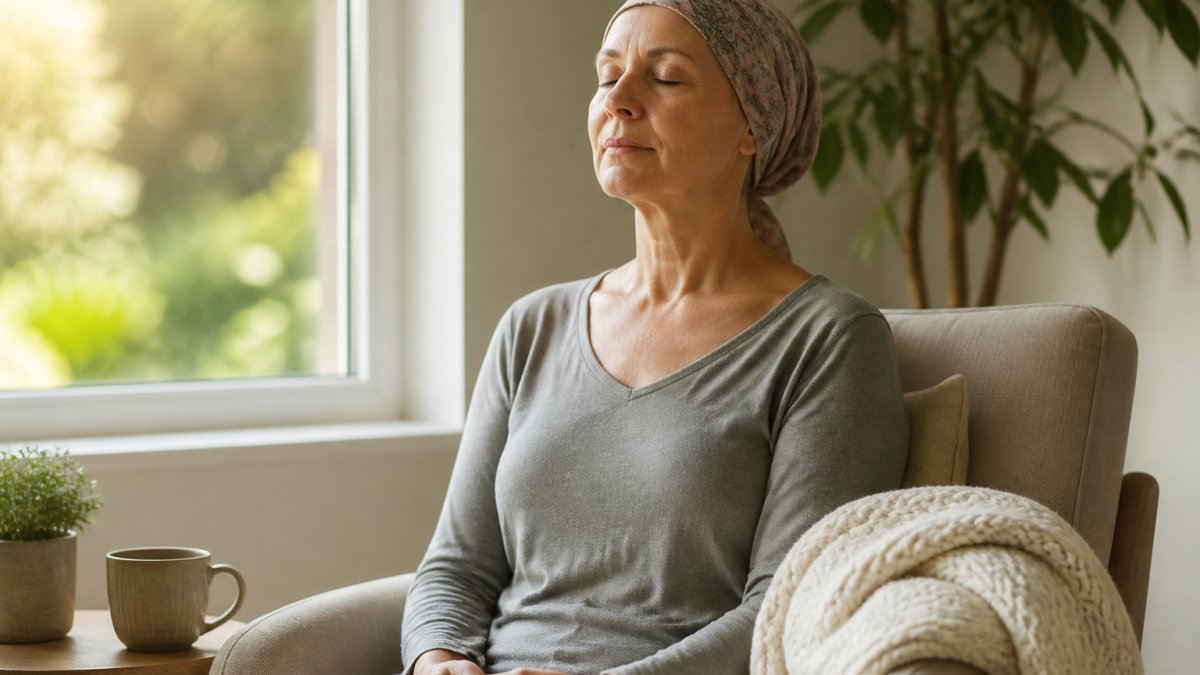
Mind-body techniques for pain work by settling the nervous system, which often runs on high alert after a cancer diagnosis. When breathing slows, muscles soften and pain feels less sharp.
Try this simple practice:
- Sit comfortably and let your shoulders drop.
- Breathe in through your nose for a slow count of four.
- Breathe out gently for a count of six.
- Repeat for five minutes, twice a day.
Guided imagery, gentle mindfulness, and calming aromatherapy can support the same response. Keep sessions short and free of pressure.
Muscle Ache Roll On | Natural Pain Relief | Essential Oil Muscle Massage | Sore →
Gentle Exercise for Cancer Survivors: Movement as Medicine
Gentle exercise for cancer survivors is one of the most reliable ways to reduce stiffness and muscle soreness. Movement keeps joints lubricated, muscles from tightening, and sleep more settled. The goal is not to push through pain, it is to move in a way that respects what your body has been through.
Match the Movement to Your Pain Pattern
Survivors often find that the right movement depends on where the pain sits and what caused it. A common pattern:
- Joint stiffness after hormone therapy or surgery, slow range-of-motion stretches, warm water movement, and short walks
- Nerve pain in hands and feet (neuropathy), balance work, seated movement, and support for foot comfort; avoid uneven surfaces if balance is uncertain
- Shoulder or chest tightness after radiation or surgery, gentle shoulder circles and wall stretches, cleared by your care team or a physical therapist
A Gentle Starter Routine
Start small and build only when the current level feels easy:
- Five-minute walk, once or twice a day, on level ground
- Seated stretches for shoulders, neck, and ankles, hold each for a slow breath
- Slow yoga or tai chi with a qualified instructor who knows your history
- Water-based movement if joints ache; warm water can feel soothing
- Balance practice near a counter or wall if neuropathy affects your feet
Stop if something sharp or new appears, and check with your care team before starting anything new, especially if you have bone, nerve, or lymphedema concerns.
Tracking What Helps
A simple note after each session, what you did, how long, and how you felt the next day, turns movement into information you can share with your care team. Patterns emerge quickly, and small adjustments often make movement more comfortable.
Natural Pain Relief Products for Home Use
Home comfort tools give you something to reach for on hard days. The goal is not to mask pain but to soothe muscles, ease tension, and support rest.
A few practical options:
- A magnesium balm for muscle relief and restful recovery, massaged into tight calves or tired feet
- A muscle ache roll-on with essential oils for sore spots on the go
Patch-test any new topical first, and avoid broken or irritated skin.


When to Call a Doctor About Cancer Pain
When to call a doctor about cancer pain: call promptly if pain is new, suddenly worse, or comes with fever, swelling, numbness, or weakness. These can signal something that needs medical attention.
Do not wait for a scheduled visit if:
- Pain wakes you night after night
- A limb feels weak or numb
- You notice swelling, redness, or warmth
If your doctor has cleared home pain management, a TENS and EMS system for drug-free relief and recovery can support muscles between appointments.

Building Your Personal Pain Relief Plan
A pain relief plan is a written record of what you feel, what you try, and what helps. It turns guesswork into something you and your care team can work with.
Track these details:
- Where the pain sits and how it feels
- What time of day it peaks
- What you tried and how it went
Bring your notes to appointments. Patterns emerge quickly, and your care team can adjust treatment options with real information.
Choosing Comfort Tools for Your Recovery
Choosing comfort tools comes down to matching the tool to the moment. A balm suits tight muscles at night; a roll-on suits a sore shoulder during the day; a TENS unit suits a cleared, ongoing ache.
Ask three questions before buying:
- Is it safe for my skin and treatment stage?
- Does it fit my daily routine?
- Can I return it if it doesn't help?
At Grace & Cadence, we curate recovery and aromatherapy tools with these questions in mind, so survivors can build a small, calm kit that supports rest and healing.
Frequently Asked Questions
What natural methods may help with pain after cancer treatment?
Gentle movement, mind-body techniques like deep breathing and mindfulness, and complementary therapies such as massage and acupuncture may help ease lingering discomfort. Topical products like arnica or magnesium balms can soothe sore muscles. Always check with your care team before starting any new approach, especially if you have open wounds, nerve changes, or are still in active treatment. Track what you try and how your pain responds so you can share useful details at your next appointment.
Which complementary therapies can support cancer pain management?
Massage, acupuncture, yoga, and relaxation techniques are among the most studied complementary therapies for cancer pain. Gentle touch and mind-body practices can reduce tension and help you feel more in control. Safety screening matters: ask your care team whether a therapy is appropriate for your specific situation, particularly if you have neuropathy, bleeding risks, or skin sensitivity. Choose practitioners experienced with cancer survivors and keep your oncology team informed about what you are using.
Is it safe to use supplements for pain after cancer?
Not all supplements are safe during or after cancer treatment. Some can interact with medications, affect clotting, or interfere with hormone therapies. Before starting any supplement, review it with your oncologist or pharmacist. Bring the exact product label so they can check ingredients and doses. Natural does not automatically mean risk-free, and evidence quality varies widely. A cautious, informed approach with professional guidance is the safest path.
When should a cancer survivor contact their care team about pain?
Contact your care team if pain is new, worsening, or interfering with sleep, appetite, or daily activities. Also call if you notice swelling, redness, fever, numbness, or pain that changes character. Sudden severe pain or pain with weakness needs prompt attention. Do not wait for a scheduled visit if something feels off. Early communication helps your team adjust your plan and rule out issues that need medical care.
Can gentle movement help with pain during cancer recovery?
Gentle movement such as walking, stretching, yoga, or light resistance work can reduce stiffness, support circulation, and ease some types of chronic pain. Start slowly and stop if pain increases sharply. A physical therapist familiar with cancer recovery can tailor a safe plan for your needs. Consistency matters more than intensity. Pair movement with rest and relaxation practices to avoid overdoing it, and check with your care team before starting something new.
The hardest part of survivorship pain is feeling unsure where to start. Grace & Cadence offers a curated collection of recovery gear and soothing aromatherapy, chosen to support comfort, rest, and peace during recovery. Explore the collection and add to cart to begin building your own gentle comfort kit.
