
Is an Infrared Heating Pad Good for Back Pain?
· Editorial Team

Last Updated: October 30, 2026
Quick Summary
An infrared heating pad can offer gentle, soothing warmth that many people find helps their back feel looser after a long day. It is a comfort tool rather than a treatment, so choose one with suitable coverage, controls, and a warranty, and seek professional care if pain is severe or persistent.
- Look for coverage from the base of the ribs to the tailbone for lower-back pain.
- Start with 10-minute sessions at a low brightness level and check your skin afterward.
- Never fall asleep with the pad running; set a timer and switch it off before resting.
- Skip heat over irritated or broken skin, and consult a clinician if you have reduced sensation.
- Seek medical assessment for pain after an injury, leg numbness, or loss of bladder or bowel control.
Table of Contents
- Why an Infrared Heating Pad Appeals to People With Back Pain
- Infrared Heat vs. Conventional Heating Pads: What Actually Differs
- What to Look for in the Best Infrared Heating Pad for Back Pain
- Our Picks From the Grace & Cadence Collection
- How to Use an Infrared Heating Pad for Back Pain
- Infrared Heating Pad Safety: When to Pause or Skip Heat
- Choosing the Right Infrared Pad for Your Routine
- Frequently Asked Questions
Why an Infrared Heating Pad Appeals to People With Back Pain
Many people with back discomfort reach for heat first, and an infrared heating pad offers a gentle, soothing way to do that. The warmth settles into the lower back and helps the muscles feel looser after a long day at a desk or on your feet. For shoppers who want a calm, comfortable routine rather than a clinical one, this approach fits naturally into everyday life.
At Grace & Cadence, we curate recovery tools with a peaceful, practical purpose in mind. Our infrared options are designed for relaxed, at-home use, so you can unwind on the couch, read a book, or simply rest without fuss. The question most readers ask is whether this kind of pad is genuinely good for back pain, and the honest answer depends on what you need from it.
Infrared Heat vs. Conventional Heating Pads: What Actually Differs
A conventional heating pad warms the surface of the skin through heated wires or an electric element. Infrared pads use light-based heat, which many people describe as a deeper, more even warmth. The difference is primarily in how the heat feels and how it is delivered, not in any guaranteed medical outcome.
Our Nicebeam Red Light Therapy Pad uses red (660nm) and near-infrared (850nm) light across a flexible 55 × 35 cm surface. That broad coverage makes it easy to rest over the lower back, shoulders, or legs while you relax. Choose the style that feels most comfortable to you, and remember that personal preference matters more than any claim.
What to Look for in the Best Infrared Heating Pad for Back Pain
A thoughtful choice comes down to how the pad fits your body, your routine, and your comfort, not just a list of features. Use these criteria to compare options calmly and confidently.
Coverage and shape. For lower-back pain, look for a pad that spans the full width of your lower back and extends from the base of the ribs to the tailbone. A flexible 55 × 35 cm surface, like the Nicebeam Red Light Therapy Pad, covers the lower back generously while still draping over shoulders or knees.
Fit and flexibility. A pad that stays in place lets you relax without constantly readjusting. Adjustable straps, a contoured shape, or a lightweight wearable design all help. Consider whether you want to lie back (a flat pad) or move around the house (a belt or band).
Controls and session timing. Adjustable brightness levels and a built-in timer let you set a session that feels right and then forget about it. Five brightness levels, as on the Nicebeam pad, give you room to find a gentle warmth. A timer is a quiet safety net, especially if you like to rest with your eyes closed.
Cover and care. A washable or wipe-clean cover makes a pad easier to keep fresh, especially if you use it daily. Check whether the cover is removable and whether the manufacturer gives clear cleaning instructions. This small detail affects how pleasant the pad feels over months of use.
Power source and portability. Corded pads offer consistent power for longer sessions at home. Battery-powered or USB-rechargeable options trade some heat consistency for freedom from outlets, useful if you like to move between rooms or travel. Think about where you will use the pad most and whether an outlet is within reach.
Warranty and return policy. A generous warranty and a clear return window let you try the pad with peace of mind. Look for at least a one-year warranty on the electronics and a return period that gives you time to test comfort and fit. These policies matter more than a long feature list when you are spending on a recovery tool.
Ease of use. The best pad is the one you will actually reach for. Simple controls, a clear manual, and a design that feels intuitive all encourage a consistent routine. If a pad feels fussy to set up, it may end up in a drawer.
Our Picks From the Grace & Cadence Collection
Nicebeam Red Light Therapy Pad is our most versatile choice for broad coverage. Its 210 dual-wavelength LEDs and five brightness levels let you adjust intensity to your comfort. At $249.00, it offers a straightforward, relaxing way to spend time on your back, shoulders, or knees.
FullGlow™ Red Light & Near Infrared Pad is a strong option for those who want a red light and near infrared pad at a lower entry price. Compare its features on the FullGlow™ Red Light & Near Infrared Pad page. At $199.95, it suits readers who are comparing options and want a dependable pad for everyday rest.

Nicebeam Red Light Therapy Belt is ideal if you prefer hands-free wear around the lower back and waist. It wraps 105 LEDs around the body and runs for 15 to 30 minutes per session. At $249.00, it suits anyone who likes to move around the house while enjoying gentle warmth.
Nicebeam Red Light Therapy Ultra Pad for Full Body is the choice for those who want maximum coverage. At $599.00, it spans a larger surface for a fuller, more indulgent rest session.
Nicebeam Red Light Therapy Pad →
Nicebeam Red Light Therapy Band offers a lightweight, wearable option at $299.00, suited to targeted spots like the shoulders or knees.
Each of these products is a peaceful, practical addition to a relaxing routine. Results vary from person to person, so choose the one that matches how you like to unwind.
How to Use an Infrared Heating Pad for Back Pain
Find a quiet spot where you can lie back or sit comfortably. If you want a larger surface for a fuller routine, explore the full-body red light pad. Place the pad over the lower back, secure the straps if your model includes them, and select a brightness level that feels pleasant. Most people rest for 10 to 20 minutes per session, a few times a week.

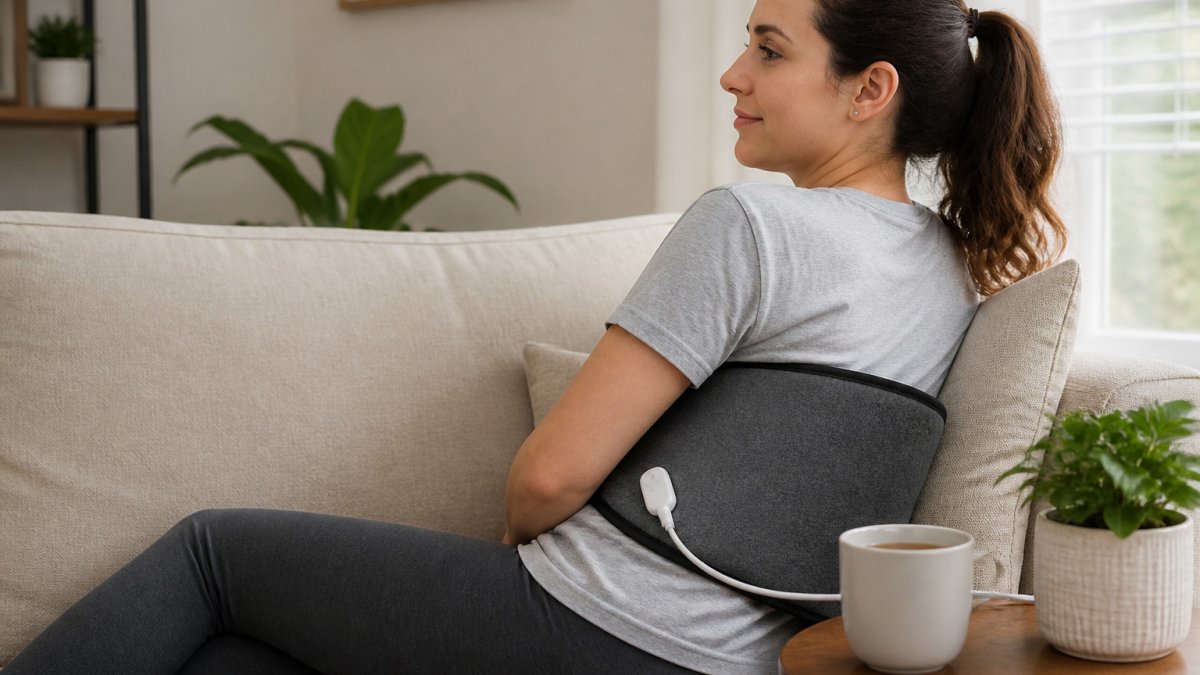
Pair the session with calm activities such as reading, gentle breathing, or soft music. Keep your body relaxed, and pause if the sensation becomes uncomfortable.
Infrared Heating Pad Safety: When to Pause or Skip Heat
Infrared heat is generally gentle, but a calm routine still deserves careful boundaries. This section goes beyond a simple warning to give you practical, evidence-aware guidance so you can rest with confidence.
Start short and check your skin. Begin with 10-minute sessions at a low brightness level. After each session, look at the area: it should feel comfortably warm, not hot, and the skin should return to its normal color within a few minutes. If you see persistent redness, feel stinging, or notice any blistering, stop using the pad and let the area rest.
Never fall asleep with the pad running. Sleep use is one of the most common ways people get heat-related skin irritation. Even a gentle pad can cause low-level burns if you stay in one position for hours. Set a timer, use the pad while you are awake and alert, and turn it off before you close your eyes.
Be cautious with reduced sensation. If you have neuropathy, diabetes, or any condition that reduces your ability to feel temperature accurately, you may not notice when the pad becomes too warm. Talk with your healthcare provider before use, and consider having someone check the skin after sessions. The same caution applies if you have circulation problems or fragile skin.
Skip heat over irritated or broken skin. Do not use any heating device over open wounds, rashes, active skin conditions, or areas with swelling that has not been evaluated. Heat can worsen inflammation in some situations. If you are unsure whether heat is appropriate for your back pain, a quick check with a clinician can save you discomfort.
Know when to pause and when to seek advice. Mild, temporary aches often respond well to gentle warmth. But seek medical assessment rather than self-treating if you notice: pain that follows an injury or fall, numbness or weakness in the legs, loss of bladder or bowel control, fever, unexplained weight loss, or pain that worsens despite rest. These signs warrant a professional opinion, not a heating pad.
Pregnancy and medical implants. If you are pregnant, have a medical implant (such as a pacemaker or spinal cord stimulator), or manage a condition that affects circulation or skin sensation, consult your healthcare provider before using an infrared heating pad. They can help you decide whether heat is appropriate and how to use it safely.
A note on evidence. Research on infrared heat for back pain is limited and mixed. Studies suggest that gentle heat can temporarily ease muscle discomfort and improve subjective feelings of relaxation, but they do not establish infrared heat as a treatment for underlying spinal conditions. Think of your pad as a comfort tool that supports a calm routine, not as a substitute for medical advice or physical therapy when those are needed.
Choosing the Right Infrared Pad for Your Routine
Think about your daily rhythm first. If you spend long periods on a sofa, a larger pad may suit you best. If you move around a lot, a wearable belt or band may fit more naturally into your day.
Consider your budget and how often you plan to use the pad. A consistent, relaxed routine tends to matter more than the most expensive model. Browse the Grace & Cadence collection, choose the option that feels right, and add it to your cart when you are ready to rest.
Frequently Asked Questions
Is a heating pad helpful for lower back pain?
Many people find gentle warmth soothing for lower back discomfort. Heat can relax tight muscles and make everyday movement feel more comfortable for a while. It is a temporary comfort measure rather than a cure, so it works best alongside gentle movement and any guidance from a health professional. If your back pain is severe, persistent, or comes with numbness or weakness, speak with a doctor before relying on heat alone.
What is an infrared heating pad?
An infrared heating pad uses infrared wavelengths to deliver warmth that reaches into the body rather than only warming the surface. Grace & Cadence carries several red light and near-infrared devices, including the Nicebeam Red Light Therapy Pad, the Nicebeam Red Light Therapy Belt, and the FullGlow Red Light & Near Infrared Pad. Each listing describes its own light wavelengths and session guidance, so comparing those details helps you choose the right format for your needs.
How does an infrared heating pad differ from a regular heating pad?
A conventional heating pad warms the skin through electric heating elements and typically has a set temperature range. An infrared pad uses light-based energy, and Grace & Cadence's red light devices are sold with timers and brightness levels rather than temperature dials. Because the two work differently, the right choice depends on whether you prefer surface warmth or a gentler light-based session. Always follow the instructions included with your device.
Can you sleep with an infrared heating pad on?
Most heating devices are designed for timed, supervised use, so falling asleep with one on is not recommended. Grace & Cadence's listings describe session lengths such as 10 to 20 minutes for the Nicebeam Red Light Therapy Pad and 15 to 30 minutes for the Nicebeam Red Light Therapy Belt, which suggests using a timer and switching the device off before you rest. Check each product's manual for its auto shut-off feature and recommended use.
