
A Gentle Guide to Holistic Pain Relief for Chronic Illness
· Terri Speid

Last Updated: November 7, 2026
Quick Summary
Holistic pain relief for chronic illness means combining several gentle, non-drug approaches so they support one another instead of relying on any single method alone. Stacked together and paced across a week, techniques like movement, heat and cold, breathing, and hands-on care change how a body feels overall.
- Pick two techniques, use them for seven days, and notice what shifts.
- Try slow breathing at four counts in and six counts out for two minutes.
- Match temperature to sensation: warmth for dull achiness, cold for sharp or swollen areas.
- Complementary approaches are best at improving function, sleep, and quality of life rather than eliminating pain.
- Start with the least invasive option that matches your situation, then build outward.
Table of Contents
- Why Holistic Pain Relief for Chronic Illness Works Best as a Team
- Holistic Pain Management Techniques You Can Start This Week
- Evidence-Based Alternative Pain Management: What the Research Supports
- How to Relieve Pain Without Medicine: A Practical Starting Point
- Natural Pain Relief for Nerve Pain: What Helps and What to Watch
- Movement Therapies: Yoga, Tai Chi, and Gentle Stretching
- Hands-On Care: Massage, Chiropractic Care, and Physical Therapy
- Nutrition, Sleep, and Self-Management for Flares
- Safety, Contraindications, and Questions to Ask Your Provider
- Building Your Multimodal Plan at Grace & Cadence
- Frequently Asked Questions
Why Holistic Pain Relief for Chronic Illness Works Best as a Team
Holistic pain relief for chronic illness is the practice of combining several gentle, non-drug approaches so they support one another rather than relying on any single method alone. At Grace & Cadence, we see this most clearly in readers managing long-term conditions: the ones who feel steadiest are rarely doing one dramatic thing. They are doing several small things consistently.
That is the core idea behind holistic pain management, and it is worth saying plainly: no single therapy carries a chronic condition by itself. Heat helps for an hour. A walk helps for a day. Breathing exercises calm the nervous system in the moment. Stacked together and paced across a week, they change how a body feels overall.
Treatments That Work Together, Not Alone
Think of your care as a team with different roles. Movement keeps joints and muscles from stiffening. Heat and cold manage flare-ups in the short term. Mind-body techniques lower the stress response that often amplifies pain. Hands-on care from a qualified professional addresses restrictions you cannot reach yourself. Nutrition and sleep give the body what it needs to recover between episodes.
The National Center for Complementary and Integrative Health describes this as integrative care: conventional treatment combined with complementary approaches that have some evidence behind them. The word "integrative" matters. It means these methods sit alongside your medical care, not in place of it.
Holistic Pain Management Techniques You Can Start This Week
You do not need a full overhaul to begin. Pick two techniques from this section, use them for seven days, and notice what shifts. That is enough to start.
Heat and Cold Therapy at Home
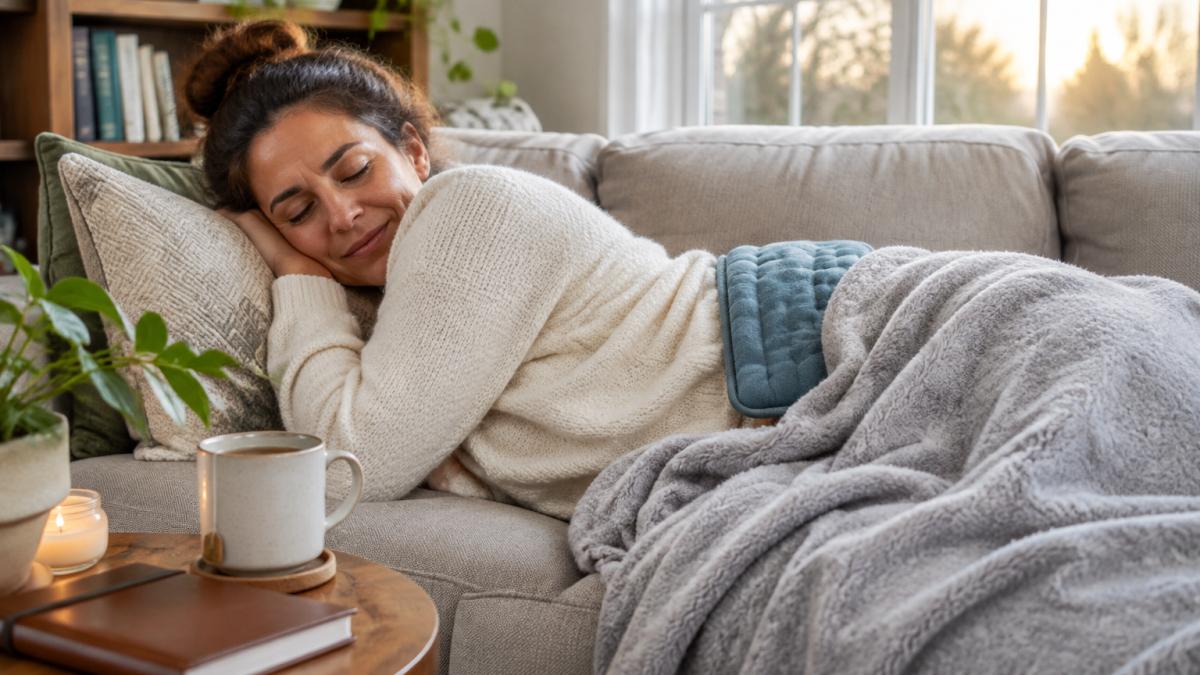
Many people find heat helpful for tight muscles, while cold is often used for a sharp, fresh flare. A common mistake is using heat on a new injury or cold on a stiff, aching joint that needs loosening. Match the temperature to the sensation: warmth for dull, persistent achiness, cold for sharp, swollen, or angry areas.
Keep sessions short and check your skin regularly, especially if sensation in that area is reduced. For days when you want topical support between sessions, a menthol-based cream such as our Acuplus pain relief cream is intended for temporary relief of minor aches and pains of muscles and joints.

Breathing, Pacing, and Mind-Body Techniques
Slow breathing is one of the simplest tools in this guide, and many people find it helps them feel calmer when discomfort is present. Try four counts in, six counts out, for two minutes. That is it.
Pacing is the other half. Most people with a chronic condition swing between pushing hard on good days and collapsing on bad ones. A steadier rhythm, doing a little and stopping before a flare, is a common approach people use to manage chronic symptoms. If you want a physical anchor for a wind-down routine, an acupressure mat can pair with slow breathing as part of a relaxation practice at home.

Evidence-Based Alternative Pain Management: What the Research Supports
Evidence-based alternative pain management means choosing complementary approaches that have been studied and discussed in clinical guidance, and being honest about how strong that evidence is. Not every popular remedy has strong backing, and the honest ones admit it. Most top-ranking guides stop at listing therapies; this section is about something more useful, how to read the evidence yourself so you can set realistic expectations and spend your time and energy wisely.
A Simple Way to Weigh the Evidence
Not all research is equal, and a headline is not a study. A practical hierarchy, from strongest to weakest, looks like this:
- Systematic reviews and clinical guidelines. These pool many studies and are the closest thing to a consensus. When a major guideline mentions a therapy, that is meaningful.
- Randomized controlled trials. Individual studies with a comparison group. Useful, but one trial is rarely the final word.
- Observational and small studies. Suggestive, not conclusive. Often where popular remedies sit.
- Anecdotes and tradition. Worth listening to, but not proof. Many people find a remedy helpful and still cannot tell you whether it was the remedy or the passage of time.
When you read about a therapy, ask: what kind of evidence is this, how many people were studied, and did the study measure pain, function, or both? A therapy that improves function and sleep is doing real work even if the pain score barely moves.
What the Evidence Tends to Support
The National Center for Complementary and Integrative Health is a good starting point because it separates what has been studied from what has not. Evidence for individual supplements is far more mixed, and the quality varies widely from one product to the next.
This is not a reason to dismiss supplements outright, it is a reason to be cautious, to buy from sources you trust, and to discuss them with your provider before adding anything.
Setting Realistic Expectations and Timelines
Complementary approaches are generally best at improving function, sleep, and quality of life rather than eliminating pain. A therapy that helps you sleep better and move more easily is doing real work, even if the pain score only drops a little.
Many people find that mind-body practices like slow breathing can feel different within days, while movement and hands-on therapies often take several weeks of consistency to judge. If you have given an approach a fair trial and see no change in function, sleep, or comfort, it is reasonable to stop and try something else rather than pushing through out of obligation.
Watch out: the biggest evidence trap is treating a single enthusiastic article or a friend's success story as proof. Track your own response in a simple journal, what you tried, for how long, and what changed, so your decisions rest on your experience rather than someone else's.
How to Relieve Pain Without Medicine: A Practical Starting Point
If you are asking how to relieve pain without medicine, start with the least invasive option that matches your situation, then build outward. A sensible order looks like this:
- Check your basics. Sleep, hydration, and steady meals come first.
- Add gentle movement. A short daily walk or a few minutes of stretching.
- Use temperature. Heat or cold for flare-ups, timed and checked.
- Try a mind-body practice. Slow breathing or guided meditation.
- Consider hands-on care. Massage, physical therapy, or chiropractic.
- Review with your provider. Bring your plan to your next appointment.
This order is not a rule, just a way to avoid starting with the most expensive or complicated option. Many people find the first three steps alone reduce how often a bad day arrives.
If you want a sensible order to build from, start with the least invasive option that matches your situation and work outward.
| Step | What to do |
|---|---|
| 1 | Check your basics: sleep, hydration, steady meals |
| 2 | Add gentle movement: short daily walk or stretching |
| 3 | Use temperature: heat or cold for flare-ups, timed and checked |
| 4 | Try a mind-body practice: slow breathing or guided meditation |
| 5 | Consider hands-on care: massage, physical therapy, or chiropractic |
| 6 | Review with your provider at your next appointment |
Natural Pain Relief for Nerve Pain: What Helps and What to Watch
Natural pain relief for nerve pain needs more caution than muscular aches. Nerve pain often feels burning, shooting, tingling, or electric, and it does not always respond to the same approaches that help a sore back. Most guides treat chronic pain as one thing; nerve pain is a good example of why that fails. What helps a stiff joint may do little for a misfiring nerve, and some popular home tools are simply not designed for it.
Why Nerve Pain Is Different
Nerve pain, sometimes called neuropathic pain, is generally understood to relate to the nerves themselves rather than muscles or joints. That is why it can persist long after an injury has healed, and why it often comes with sensations like numbness, tingling, or hypersensitivity. Because the underlying cause varies widely, from diabetes to compression to other medical conditions, the first step is always a proper assessment rather than a home experiment.
Gentle Approaches People Commonly Find Helpful
Gentle movement, pacing, and relaxation techniques are generally considered safe starting points. What works varies, so track your response rather than assuming. Mind-body practices such as slow breathing can help take the edge off the stress that often amplifies nerve pain, and pacing, doing a little and stopping before a flare, tends to produce fewer bad days over a month.
A common pattern is that people do best with a low-and-slow approach: short sessions, frequent breaks, and a written record of what changed. If a technique makes the burning or tingling worse rather than calmer, that is useful information, stop and note it.
What to Watch and When to Seek Care
Watch out: nerve pain can signal an underlying condition that needs medical assessment, and numbness or weakness should never be self-managed with home remedies alone. If you notice new weakness, loss of sensation, or pain that is worsening quickly, contact a healthcare professional rather than experimenting.
It is also worth asking your provider whether any therapy you are considering is appropriate for your specific condition, and whether it interacts with your medications or treatments. A good provider will welcome the questions, and a clear answer is worth more than a dozen internet opinions.
Movement Therapies: Yoga, Tai Chi, and Gentle Stretching
Movement is the closest thing this field has to a universal recommendation. Gentle stretching, yoga, and tai chi are movement practices many people use to keep joints mobile, and they can often be adapted to different ability levels.
The key word is gentle. A common mistake is treating a stretching session like a workout and pushing into sharp pain. Discomfort at the edge of a stretch is fine; pain that lingers afterward is a signal to back off.
Tai chi appeals to many people because it is slow, low-impact, and combines movement with breathing. Yoga can be modified with props and chairs. If you are starting at home, a supportive non-slip surface makes a real difference, and our natural rubber yoga mat is built for exactly that kind of daily practice.
Hands-On Care: Massage, Chiropractic Care, and Physical Therapy
Professional hands-on care addresses what you cannot reach on your own. Massage therapy eases muscular tension. Physical therapy builds strength and corrects movement patterns. Chiropractic care and spinal manipulation are used by some people for certain back and neck complaints.
These are not interchangeable. Physical therapy tends to be the most function-focused, teaching you exercises to keep gains. Massage offers short-term relief and relaxation. Chiropractic care suits some conditions and not others, and it is worth asking your provider whether it is appropriate for yours.
Between sessions, self-massage can help maintain what you gained. A massage gun can be a simple way to work through tight areas at home, gently and at your own pace, following the device instructions.
Nutrition, Sleep, and Self-Management for Flares
What you eat and how you sleep shape how pain feels day to day. An anti-inflammatory eating pattern, built around vegetables, fruit, whole grains, and healthy fats, is a reasonable general direction, though no single diet works for everyone. Supplements deserve caution; discuss them with your provider before adding any.
Sleep is often the first thing to unravel during a flare and the last thing people address. A dark, quiet room and a consistent bedtime help more than most people expect. A contoured sleep mask is a small, practical addition for blocking light without pressure on the face.

Self-management means having a flare plan before you need it. Write down what helps, what to pause, and who to call. On a bad day, you will not want to think it through from scratch.
Safety, Contraindications, and Questions to Ask Your Provider
Safety deserves its own section because complementary does not mean risk-free. Heat can burn skin with reduced sensation. Some techniques are not appropriate during pregnancy, after surgery, or with certain conditions. Supplements can interact with medications.
Watch out: the biggest risk is not the therapy itself but delaying proper medical care. Complementary approaches work alongside conventional treatment, not instead of it.
Questions worth asking your provider:
- Is this approach appropriate for my specific condition?
- Are there contraindications with my medications or treatments?
- What should I stop immediately if I notice?
- How long before I should expect any change?
Bring your list. A good provider will welcome the questions.
Building Your Multimodal Plan at Grace & Cadence
A multimodal plan simply means several approaches working together, reviewed and adjusted over time. Start with two techniques, add one hands-on option if it suits you, and revisit the whole plan monthly.
This is where we hope to help. Our Mindfulness & Self-Care collection and our Sleep & Relaxation collection bring together practical tools for gentle, layered self-care routines.
Chronic pain asks for patience, and building a plan that actually fits your life takes time. Grace & Cadence curates recovery gear, aromatherapy, and reflective literature designed to support that steady, intentional approach, with thoughtfully selected tools for rest, self-care, and spiritual reflection. Explore the collections and find the pieces that suit your own rhythm. Get started with Grace & Cadence and build a gentler daily routine.
Frequently Asked Questions
What is the best natural remedy for chronic pain?
There is no single best remedy. Research and clinical guidance point to a multimodal approach: movement therapies, mind-body techniques, heat and cold, and hands-on care such as massage or physical therapy. What works depends on your condition, your function, and what you can access. Start with one or two low-risk options, track how you feel over several weeks, and adjust with your healthcare provider.
How can I relieve chronic pain without medicine?
Many people combine gentle movement, breathing exercises, heat or cold therapy, and stress reduction to relieve pain without medicine. Pacing your activity and protecting sleep also matter. Non-drug approaches are often used alongside conventional treatment rather than replacing it. Talk with your provider before stopping any prescribed medication, and ask which options are safe for your specific condition.
Which non-drug approaches to chronic pain have evidence behind them?
Guidelines and reviews most often support exercise and movement, mindfulness and meditation, yoga and tai chi, massage therapy, acupuncture, and physical therapy for certain pain conditions. Heat and cold therapy are widely used for short-term comfort. Evidence varies by condition, so ask your provider which approaches are backed for your diagnosis and how long a fair trial should last.
Can natural pain relief help with nerve pain?
Some people find relief from nerve pain through gentle movement, mind-body techniques, and hands-on care, but nerve pain often needs a tailored plan. Safety matters: avoid strong heat or cold on areas with reduced sensation, and check with your provider before trying supplements or essential oils. Track symptoms such as numbness, tingling, or weakness and report changes promptly.
What should I ask my healthcare provider before trying an alternative pain treatment?
Ask whether the approach is safe for your condition and medications, what evidence supports it, how long to try it before judging results, and what side effects to watch for. Also ask about cost and coverage. Bring a list of everything you take, including supplements and essential oils, because interactions are possible. A good provider will help you set realistic expectations.
