
7 Benefits of Red Light Therapy Recovery
· Editorial Team

Last Updated: October 25, 2026
Quick Summary
Red light therapy supports recovery by using 660nm and 850nm wavelengths to encourage cellular energy, circulation, and tissue repair. Most at-home sessions run about 10 to 20 minutes per area, three to five times per week, with at least a day of rest between sessions on the same area.
- Start with 10-minute sessions and gradually build to 15 to 20 minutes as your body adjusts.
- For panel devices, sit or stand about 6 to 12 inches away, following the manufacturer's guidance.
- Some people notice reduced stiffness after the first week; others see gradual changes over four to six weeks.
- Give any new routine at least three to four weeks before judging whether it is helping.
- Check with your pharmacist or doctor before starting if you take medications that increase light sensitivity.
Table of Contents
- How Red Light Therapy Supports Recovery
- 1. Red Light Therapy for Muscle Recovery
- 2. Easing Joint Discomfort with Red Light Therapy for Joint Pain
- 3. Calming Inflammation and Supporting Circulation
- 4. Skin Health and Tissue Repair
- 5. Red Light Therapy Recovery Time: What to Expect
- 6. Red Light Therapy Safety and Who Should Take Care
- Choosing a Red Light Device for Your Recovery Routine
- Frequently Asked Questions
How Red Light Therapy Supports Recovery
Red light therapy is a non-invasive treatment that uses specific wavelengths of light to support the body's natural healing processes (What to Look for in Red Light Therapy: A Product Guide Backed by Science). At Grace & Cadence, we see it as one of the gentlest tools for anyone rebuilding strength after illness, injury, or the daily wear of a busy life.
The benefits of red light therapy recovery work starts at the cellular level. Red and near-infrared light reach the skin and deeper tissue, where they support cellular energy and blood flow. Many people find it calming, simple to use at home, and easy to fit into a quiet evening routine.
Below, we walk through seven benefits, plus what to expect, how to stay safe, and how to choose a device that fits your life.
1. Red Light Therapy for Muscle Recovery
Muscle soreness after exercise or physical therapy responds well to consistent light sessions. Red light therapy for muscle recovery is often used to ease minor muscle discomfort and support the body's natural repair process.
A common mistake is treating one hard workout with one long session and expecting instant relief. In practice, steady short sessions matter more than occasional long ones.
2. Easing Joint Discomfort with Red Light Therapy for Joint Pain
Joint stiffness often improves with gentle, regular light exposure. Red light therapy for joint pain is commonly used around the knees, hands, and shoulders to support joint mobility and everyday comfort.
Many people pair sessions with slow stretching. The warmth and stillness of a session can make movement feel easier afterward.
3. Calming Inflammation and Supporting Circulation
Better blood flow is one of the most reported benefits of red light therapy recovery. Light exposure supports circulation, which in turn helps the body move nutrients to tissue that needs repair.
Think of it as supporting the body's own cleanup and delivery system. Many users describe a relaxed, warm feeling during and after sessions.
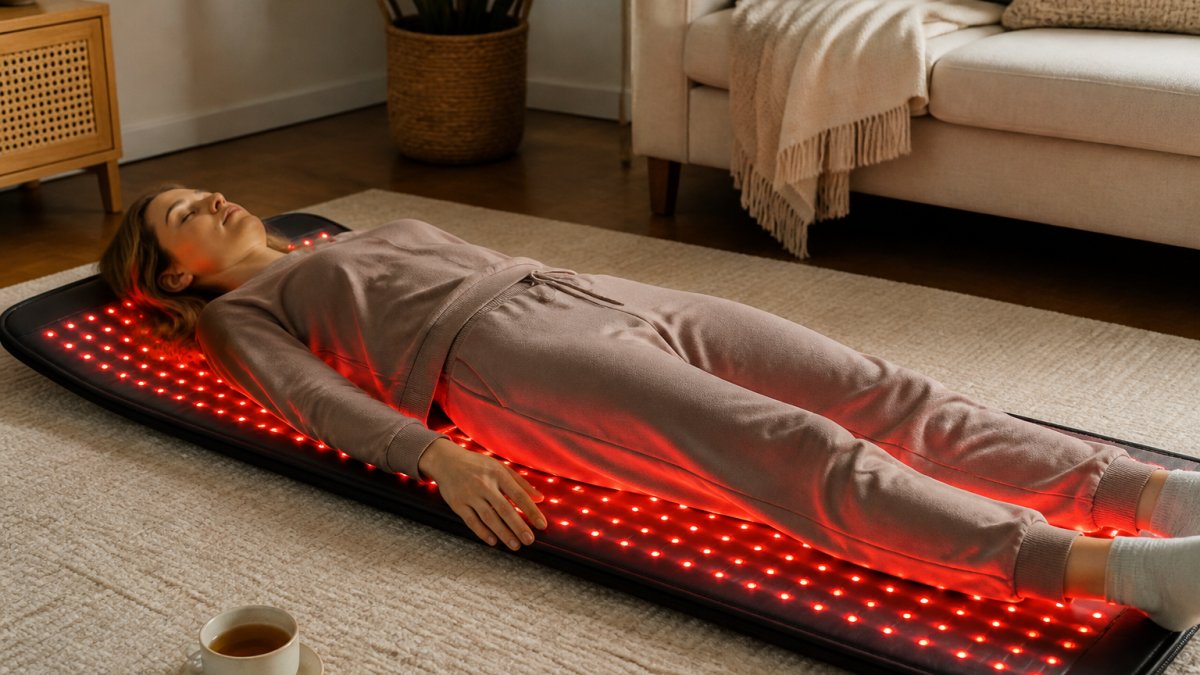
For full-body support, our Nicebeam Full Body Red Light Therapy Mat covers shoulders to feet in one session.

4. Skin Health and Tissue Repair
Red light at 660nm works near the skin's surface. It supports collagen production, which plays a role in skin health and tissue repair over time.
Near-infrared light at 850nm reaches deeper. Together, the two wavelengths are the pair most often studied for skin and tissue support.
Consistency matters here more than intensity. Most people notice changes gradually, not overnight.
5. Red Light Therapy Recovery Time: What to Expect
Most at-home sessions run about 10 to 20 minutes per area, but the details matter more than the clock. A practical starting point many practitioners suggest is three to five sessions per week, with at least a day of rest between sessions on the same area. Consistency over weeks, not intensity in a single session, is what supports recovery.
Red Light Therapy Mat - 1280 LEDs Full Body Blanket 660nm 850nm →
Distance from the device also affects your session. For panel-style devices, a common recommendation is to sit or stand about 6 to 12 inches away, following the manufacturer's guidance for your specific model. Wearable pads and mats are designed for direct contact, so distance is less of a variable.
Recovery timelines vary by person and by goal. Some people notice a sense of ease or reduced stiffness after the first week of regular use. Others see gradual changes over four to six weeks. A common pattern is to give any new routine at least three to four weeks before judging whether it is helping. For a deeper look at what to expect from sessions, a comprehensive guide to red light treatment is available in paperback.
To measure results, keep a simple log. Note soreness, stiffness, or mobility before and after sessions, and track how you feel during everyday activities. This helps you separate real change from wishful thinking. If you are recovering from an injury or surgery, coordinate with your care team and use the log to share progress at appointments.
Here are the practical session and timeline details the article lays out for at-home use.
| Item | Value | Note |
|---|---|---|
| Session length per area | About 10 to 20 minutes | Start with 10 minutes and build up |
| Sessions per week | Three to five | At least a day of rest between sessions on the same area |
| Distance for panel devices | About 6 to 12 inches | Follow the manufacturer's guidance for your model |
| First noticeable ease | After the first week | Some people notice reduced stiffness |
| Gradual changes | Over four to six weeks | Others see changes more slowly |
| Judging a new routine | At least three to four weeks | Consistency over weeks matters more than intensity |
6. Red Light Therapy Safety and Who Should Take Care
Red light therapy is generally well tolerated by healthy adults when used as directed, but a few precautions deserve attention. Eye protection is often overlooked: many devices include goggles, and using them consistently helps prevent eye strain or headaches. If your device does not include eye protection, close your eyes or wear protective eyewear during sessions.
Medications can increase light sensitivity. Common examples include certain antibiotics (like tetracyclines), some acne treatments (like isotretinoin), and certain diuretics. If you take any medication, check with your pharmacist or doctor before starting. A simple question at the pharmacy counter can save you discomfort.
Condition-specific guidance matters too. People with a history of skin cancer, active skin infections, or open wounds should consult their care team before treating those areas. Pregnant readers should confirm safety with their provider, as research on red light therapy during pregnancy is limited. Anyone with a condition that causes light sensitivity, such as lupus, should also seek advice first.
When to seek medical advice: if you experience unusual pain, blistering, or skin changes after a session, stop and consult a professional. Red light therapy is a supportive tool, not a replacement for medical care. If you are recovering from surgery or a significant injury, clear it with your care team before adding sessions to your routine.
Choosing a Red Light Device for Your Recovery Routine
Start with your goal, then match the device to it. A small pad suits one sore area. A mat suits whole-body sessions.
Key things to compare:
- Wavelengths: look for 660nm and 850nm
- Coverage: targeted pad versus full-body mat
- Session time: most devices suggest 10 to 20 minutes
- Storage: foldable designs suit smaller homes
For readers who want full-body coverage with clear wavelength details, our Red Light Therapy Mat - 1280 LEDs Full Body Blanket 660nm 850nm lists 1280 LEDs at 660nm and 850nm.

Frequently Asked Questions
How does red light therapy aid recovery?
Red light therapy delivers red and near-infrared wavelengths to the skin, where they are thought to support cellular energy and circulation. For recovery, this may help ease muscle soreness, support joint comfort, and encourage the body's natural tissue repair process. Many people use it as part of a wind-down routine after exercise or a long day. Results vary, and it works best alongside rest, hydration, and gentle movement rather than as a replacement for them.
How long does red light therapy take to work for recovery?
Red light therapy recovery time varies from person to person. Some people notice a sense of ease after a single session, while others see more consistent changes over a few weeks of regular use. A practical approach is to use your device for around 10 to 20 minutes per session, several times a week, and track how you feel over two to four weeks. If you have a medical condition or are in active treatment, check with your care team first.
Is red light therapy safe to use at home?
At-home red light therapy is generally considered low-risk when you follow the device instructions. Keep sessions short, protect your eyes if the device advises it. Red light therapy safety also means checking with a doctor if you are pregnant, taking photosensitizing medication, or managing a condition that affects your skin. Stop and seek advice if you notice unusual redness or discomfort.
Can red light therapy help with arthritis discomfort?
Some people with joint discomfort, including arthritis, use red light therapy as part of a broader comfort routine. Research in this area is ongoing, and it should not replace medical care or prescribed treatment. If you are considering red light therapy for joint pain, speak with your doctor first, especially if you have an inflammatory condition or are in active treatment. Used thoughtfully, it can be a gentle addition to your self-care.
Building a recovery routine takes patience, and it helps to have tools that feel calm rather than clinical. Grace & Cadence curates recovery gear, aromatherapy, and reflective reading so your evenings can hold both rest and hope. Explore our red light therapy collection, settle in, and give your body the quiet time it deserves.
